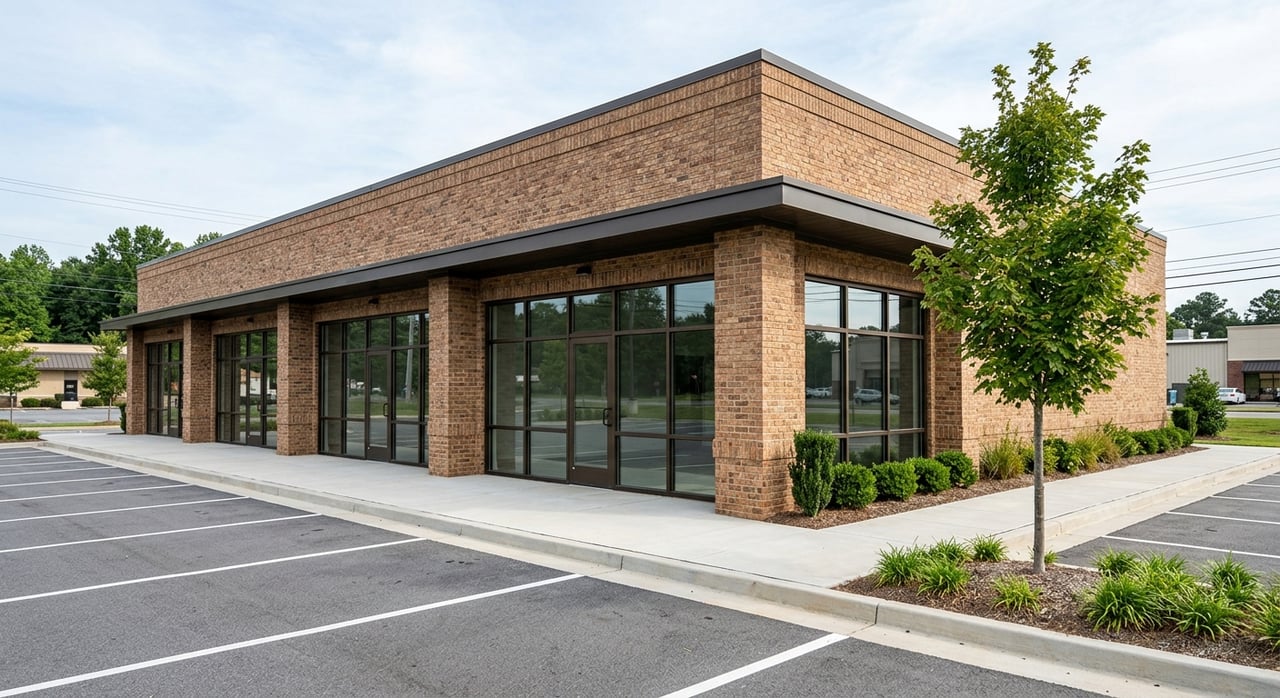
If you are searching for small commercial or office space in Grand Rapids, the biggest surprise is often not the rent on the listing. It is the real monthly cost once lease structure, parking, buildout, and zoning all come into focus. Whether you are opening a new office, relocating a small business, or comparing lease options with a possible purchase, understanding the local landscape can save you time and money. Let’s dive in.
Grand Rapids lease market snapshot
If you are leasing in Grand Rapids, it helps to think in ranges instead of one citywide number. Reported rents vary based on property type, submarket, building size, and whether the quote is gross, modified gross, or NNN.
According to NAI Wisinski’s Q4 2025 West Michigan market reports, office conditions were relatively balanced at the end of 2025, with 7.3% vacancy and $17.99 per square foot average asking rent on a modified-gross basis. Downtown Grand Rapids Inc. reported 10.8% office vacancy, $22.56 per square foot office base rent, and about 10.1 million square feet of office inventory in the downtown district.
For a more directional look at larger office properties, CommercialCafe’s Grand Rapids office market data showed a 2024 city average asking rent of $23.92 per square foot for buildings 25,000 square feet and larger. That same report showed notable submarket variation, including Downtown at $24.50, North at $23.64, Ada-Forest Hills at $19.70, Southeast at $16.55, and Northeast at $12.17 per square foot.
If your business is considering a storefront or small retail-style commercial space, the same NAI Wisinski report showed West Michigan retail asking rents at $13.30 per square foot NNN with 6.0% vacancy. That is a useful reminder that office and storefront spaces often price differently, and the lease structure matters just as much as the headline rent.
Lease structure affects your true cost
Two spaces can show the same asking rent and still have very different monthly costs. That usually comes down to how the lease handles operating expenses.
Under Cornell Law School’s legal definition of a gross lease, a gross lease generally means the landlord covers many operating expenses within the rent. A net lease shifts some or all of those costs to the tenant, and those leases are commonly structured as single net, double net, or triple net, also called NNN.
In Grand Rapids, many office reports quote space on a modified-gross basis, which sits somewhere in the middle. In a modified-gross lease, the landlord and tenant split some operating costs, so your actual occupancy expense may be higher than the advertised base rent.
Before you compare spaces, ask for a clear breakdown of:
- Base rent
- CAM or common area maintenance charges
- Property tax pass-throughs
- Insurance costs
- Utility responsibilities
- Janitorial and maintenance obligations
- Parking costs
That side-by-side comparison often tells you more than the listing price alone.
Start with the letter of intent
Before the full lease is drafted, many small commercial deals begin with a letter of intent, or LOI. According to Nolo’s explanation of commercial letters of intent, the LOI often lays out the basics, including space size, rent, lease term, start date, prohibited uses, assignment or sublease rights, and sometimes parking.
This step matters because it helps you lock in the business terms early. It also gives you a practical framework for deciding whether a space is worth deeper due diligence.
A strong LOI should clearly outline:
- The exact suite or premises
- Rent and lease type
- Lease term and renewal options
- Buildout expectations
- Possession date
- Parking arrangements
- Signage rights
- Any contingencies tied to approvals or space condition
Key lease terms to negotiate early
A small commercial lease is more than monthly rent. The details can shape how well the space actually works for your business.
Nolo’s commercial lease basics guide highlights several terms worth reviewing early, including parking, signage, term length, renewal options, use clauses, exclusivity, and landlord-entry rights. In practice, these are often the items that create friction later if they are vague on day one.
Here are some of the most important points to review before signing:
Parking and access
If your customers, staff, or clients rely on convenient parking, do not treat it as a minor detail. In downtown Grand Rapids, parking can be a meaningful operating cost.
The city’s downtown parking information shows monthly parking options at roughly $48 to $180 per month, plus an evening permit for $50 and a neighborhood commuter lot permit for $35. The city also notes that the DASH shuttle connects key downtown locations and parking lots.
If your operation needs deliveries, loading should also be reviewed early. Grand Rapids allows loading zone applications for businesses only in specific circumstances, including when no off-street loading option exists.
Signage and visibility
For customer-facing businesses, visibility can be just as important as square footage. If your lease does not clearly grant signage rights, you may end up with a location that is harder to find or harder to market.
Make sure the lease addresses:
- Building signage
- Monument or directory signage
- Window signage restrictions
- Approval process for design and installation
- Responsibility for cost, permits, and maintenance
Use clause and exclusivity
Your use clause explains what you are allowed to do in the space. If it is too narrow, your business could outgrow the lease faster than expected. If it is too broad or poorly matched to zoning, you may face approval issues.
If your business benefits from reduced direct competition within a center or building, ask whether any exclusivity language is possible. This is not available in every transaction, but it is worth raising early if it matters to your operation.
Renewal, assignment, and subleasing
Flexibility matters, especially for small businesses. Nolo’s guide to sublet and assignment clauses recommends negotiating these rights so a tenant may be able to exit, reduce space, or transfer occupancy without automatically defaulting.
You should also pay close attention to:
- Renewal option timing
- Rent increases during renewal terms
- Whether assignment requires landlord approval
- Whether subleasing is allowed
- Any transfer fees or profit-sharing provisions
Buildout and tenant improvement options
Many small commercial spaces need changes before you can open the doors. That may include walls, flooring, paint, wiring, fixtures, or layout changes.
According to Nolo’s tenant improvement allowance guide, a tenant improvement allowance, often called a TIA, is a common negotiation point. If a landlord does not want to fund improvements directly, they may instead offer free rent to help offset your buildout costs.
When you review a lease, ask:
- Is there a tenant improvement allowance?
- Who controls contractors and approvals?
- What work must be completed before occupancy?
- Does free rent apply during buildout?
- Who owns the improvements at lease end?
These questions can make a major difference in your upfront cash needs.
Zoning and site fit in Grand Rapids
A space that looks right still has to be legally usable for your business. In Grand Rapids, zoning is one of the first boxes to check.
The city explains that land uses may be permitted by right, special land use, qualified review, or prohibited depending on the zoning district. You can verify a property through the city’s zoning ordinance resources and planning maps.
The city’s zoning language for some business districts also reflects why site selection is so practical here. In certain areas, street-level retail and services with upper-story residential or office use are encouraged, and parking is expected through a mix of on-street and screened off-street arrangements. That helps explain why frontage, walkability, parking, and deliveries all matter in real leasing decisions.
A smart Grand Rapids location checklist should include:
- Confirming the zoning district
- Verifying your use is allowed
- Reviewing parking availability
- Checking street frontage and visibility
- Looking at pedestrian and transit access
- Planning for deliveries or loading
- Asking about any site constraints before lease signing
If a property needs zoning relief, the city’s variance application process requires a site plan showing the number and location of on-site parking spaces. That is one more reason to treat parking as an early due-diligence item, not an afterthought.
Watch operating expenses in net leases
If you are considering a net lease, especially an NNN deal, ask detailed questions about pass-through costs. Common area maintenance, taxes, and insurance can fluctuate, and the lease language controls what the landlord can bill back.
Nolo’s overview of lease audits notes that a lease audit can help confirm whether CAM and other pass-through expenses are accurate and consistent with the lease. You may not need a formal audit for every small deal, but you should still request clear expense history and billing methodology before you commit.
Lease or buy in Grand Rapids?
Some small business owners start out searching for a lease and then realize ownership may also be worth a look. The right answer usually depends on your timeline, cash position, and long-term plans.
Leasing is often the more flexible path if you want to move quickly, limit upfront costs, or preserve capital. Buying can make more sense if you want long-term control, the ability to customize the property, and the opportunity to build equity over time.
The SBA notes that its 7(a) loan program can be used for acquiring, refinancing, or improving real estate and buildings, with real-estate loan terms of up to 25 years through participating lenders. The SBA’s 504 loan program offers long-term fixed-rate financing for major fixed assets, including existing buildings, land, parking lots, and landscaping, with a maximum loan amount of $5.5 million.
For owner-users, the 504 program is designed around business occupancy rather than speculative rental ownership. SBA materials also reference occupancy thresholds, including scenarios where the applicant or operating company will occupy at least 51% of the rentable property.
If you are weighing lease versus purchase, compare:
- Upfront cash needs
- Monthly occupancy cost
- Buildout flexibility
- Growth plans
- Control over parking and signage
- Exit options
- Long-term equity potential
A practical next step for your search
Small commercial leasing in Grand Rapids is rarely just about square footage. The best deal is usually the one that fits your business model, budget, access needs, and long-term flexibility.
If you want help sorting through office, storefront, or small commercial lease options in West Michigan, working with a local advisor can make the process more efficient and less stressful. Ann Huizen brings decades of local experience, hands-on guidance, and a relationship-first approach to helping clients evaluate space, negotiate terms, and make smart real estate decisions.
FAQs
What does modified gross lease mean for Grand Rapids office space?
- A modified gross lease is a hybrid structure where the landlord and tenant split some operating expenses, so your total cost may be higher than the advertised base rent.
What office rent should you expect in Grand Rapids?
- Office rents vary by source, submarket, and lease type, with reported benchmarks ranging from about $17.99 per square foot modified gross in the broader West Michigan market to higher downtown and larger-building benchmarks above $22 per square foot.
What should you check before leasing small commercial space in Grand Rapids?
- You should review lease type, zoning, parking, signage rights, permitted use, buildout needs, renewal options, and assignment or sublease flexibility before signing.
How do Grand Rapids parking costs affect a commercial lease?
- Parking can add meaningful monthly costs, especially downtown, where city-listed monthly options range from about $48 to $180 per month depending on location.
When should a Grand Rapids business consider buying instead of leasing?
- Buying may be worth considering when you want long-term control, space customization, and equity growth, while leasing is often the more flexible option for speed and lower upfront cash needs.